Last updated November 22, 2026
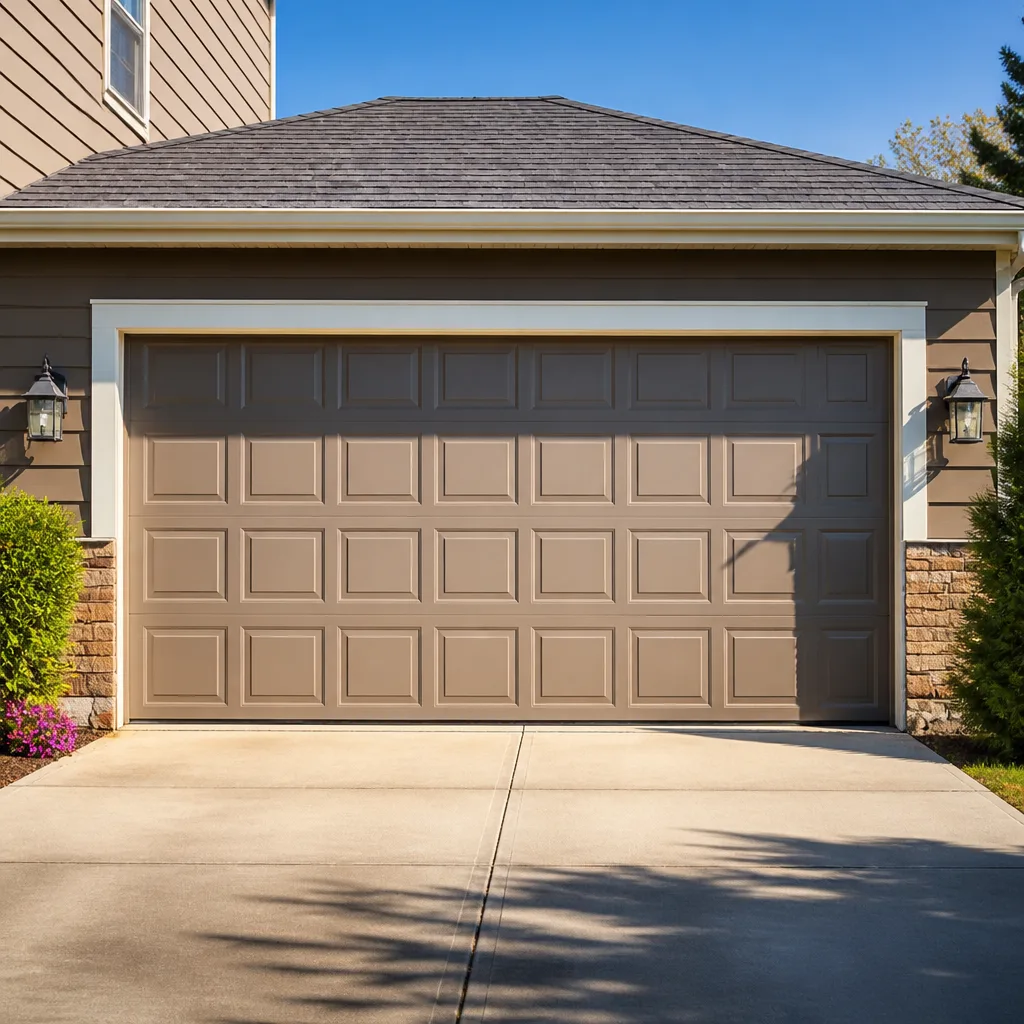 Raised-panel steel
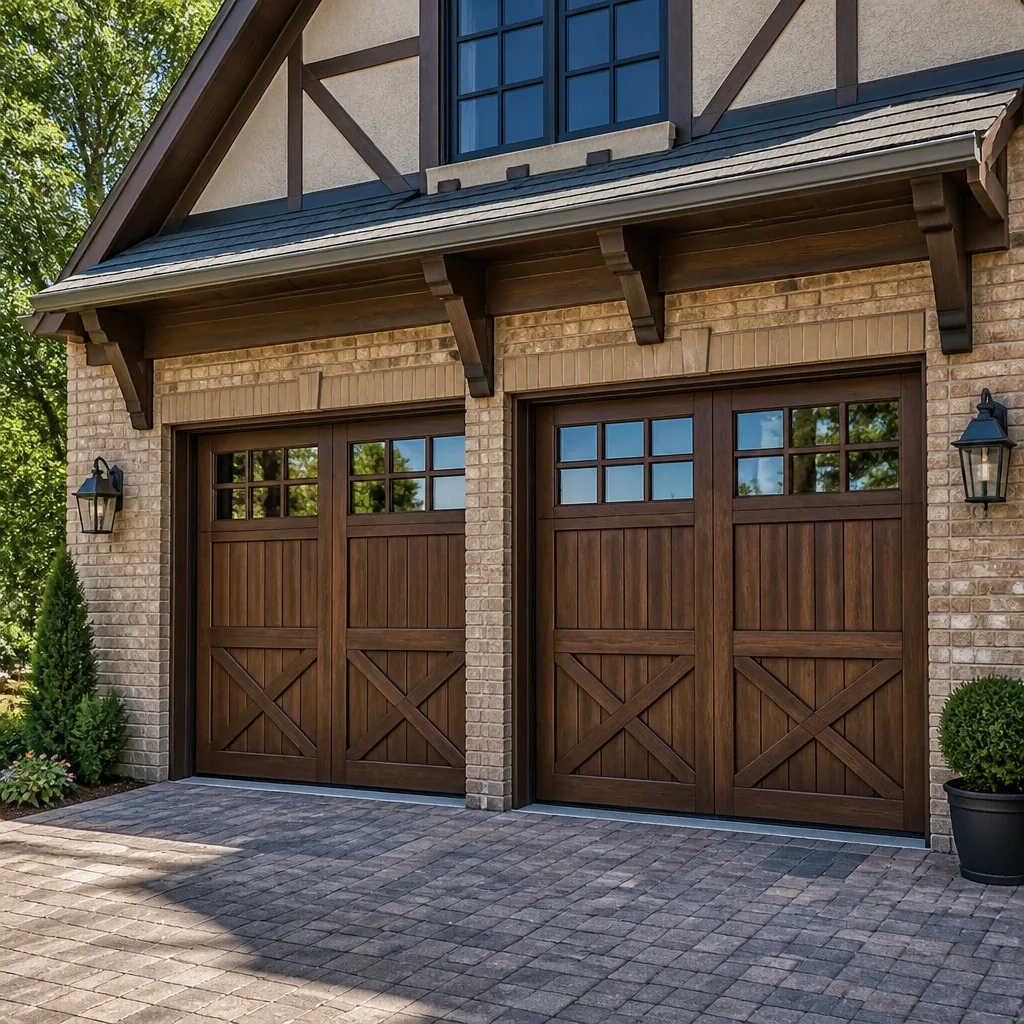 Carriage house
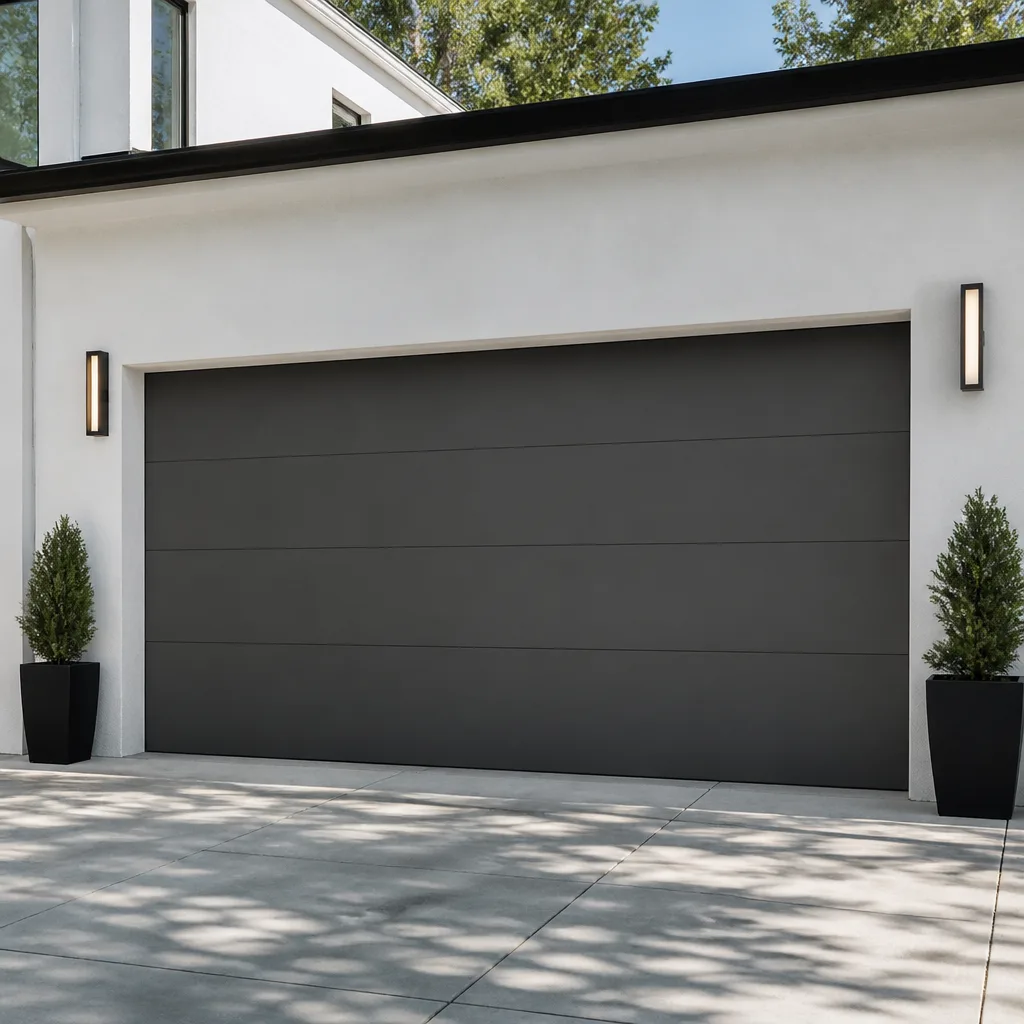 Modern flush
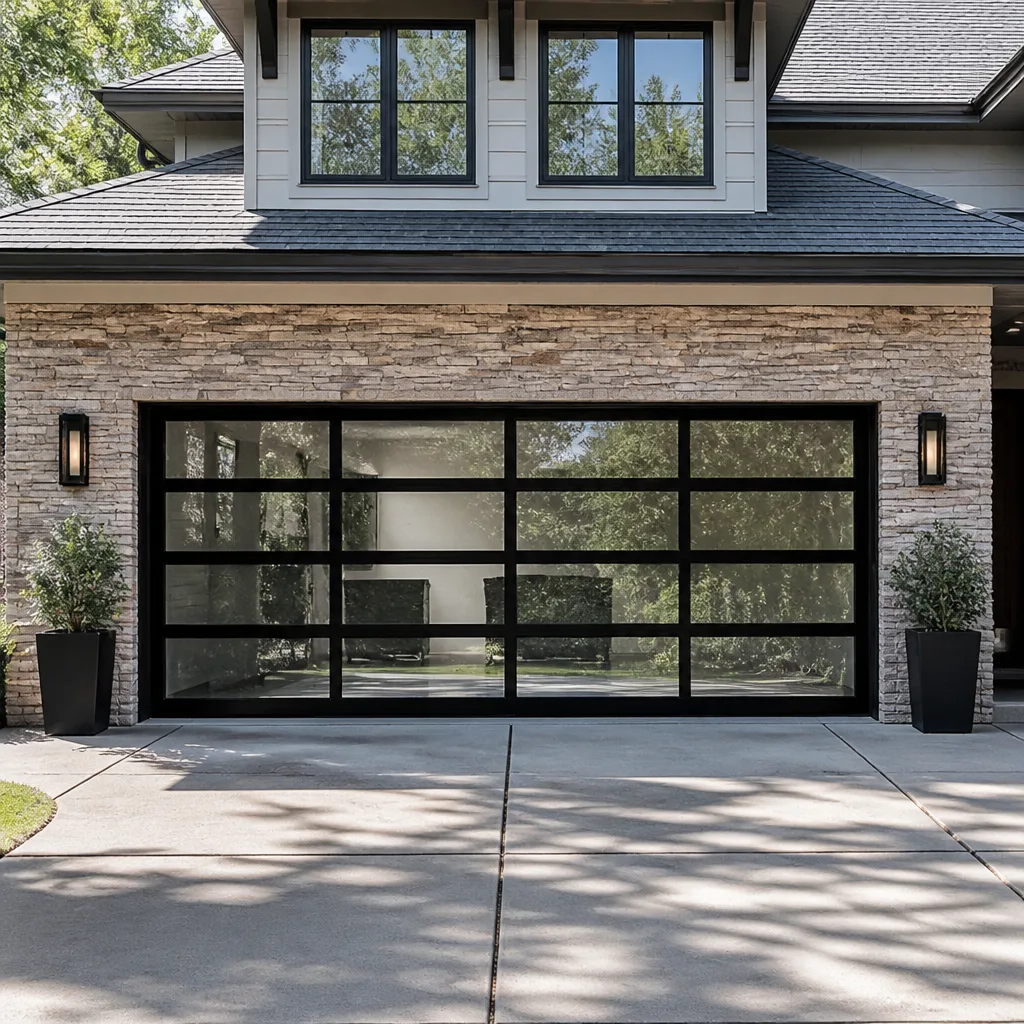 Full-view glass
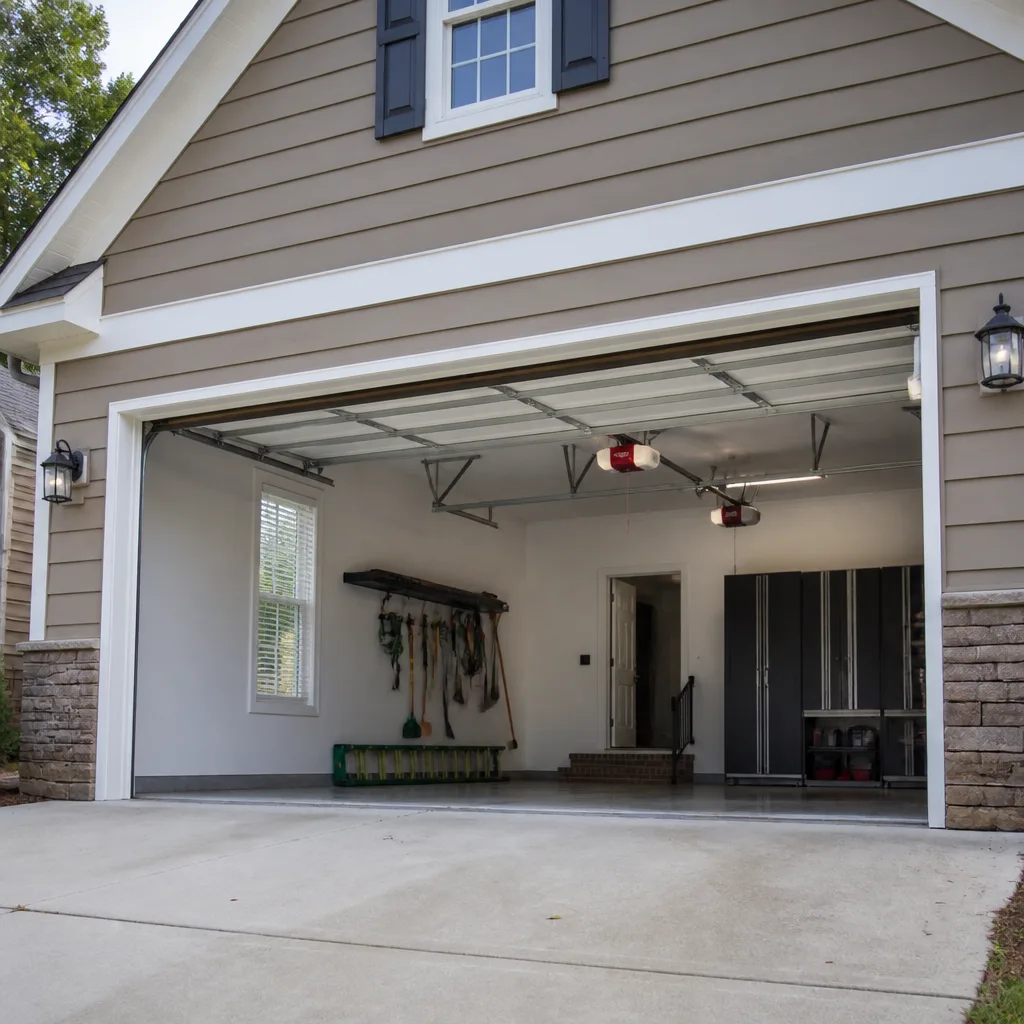 LiftMaster openers
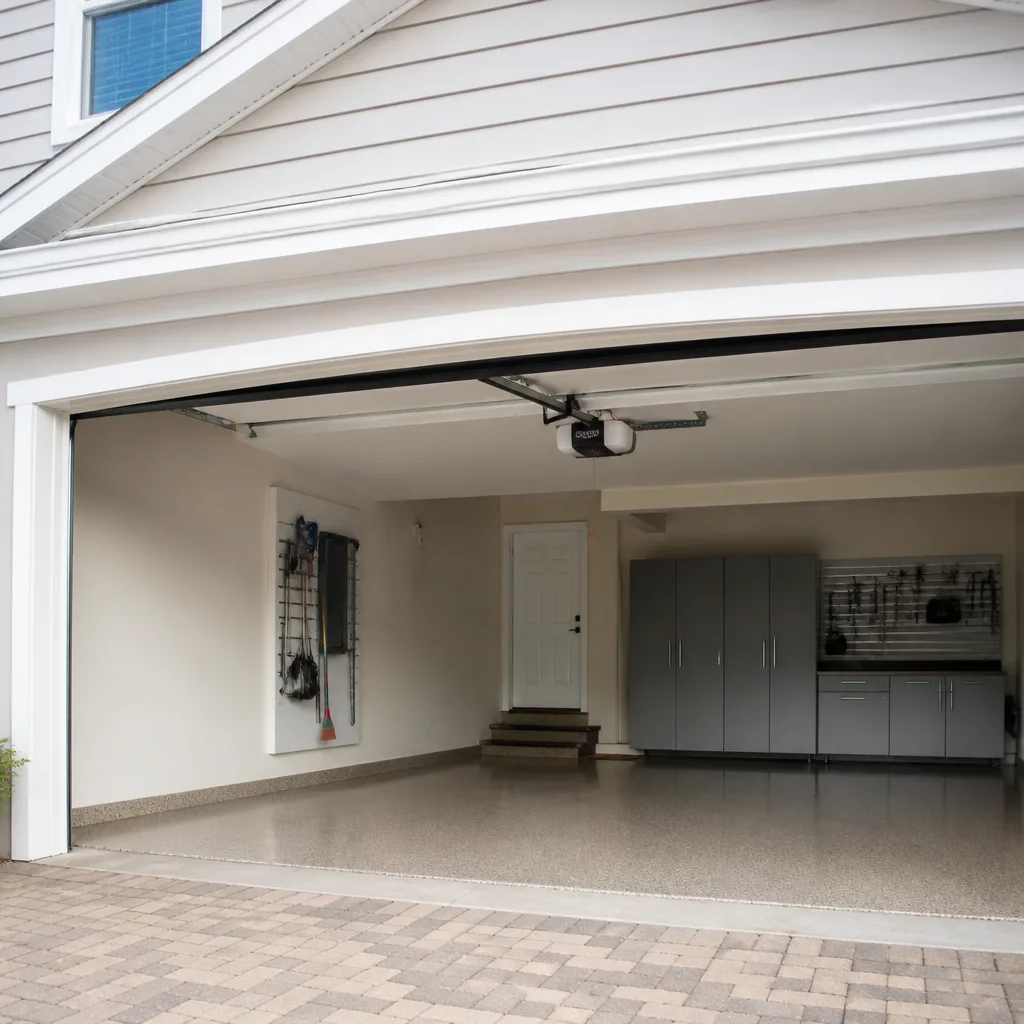 Chamberlain openers
Full 25-point door and opener safety check with every visit - springs, cables, rollers, tracks, and your LiftMaster or Chamberlain opener included
You get a price before we start. It does not change when the pro arrives.
Get your free estimateGarage Door Warning Signs: A Norwich Homeowner’s Reference Guide
Most warning sign guides stop at the obvious: your door is loud, your door is crooked, your door won’t close. That’s not much help when you’re standing in a cold garage trying to describe the problem to a technician over the phone. A door makes four distinct kinds of grinding sounds, and each one points to a different part. “It’s grinding during the last 18 inches of closing, not opening” gets you a faster diagnosis than “it’s making a noise.” This guide maps what you hear and see to what’s actually failing inside your door system, so you can describe it accurately, judge how urgent it is, and skip the expensive guesswork. It’s written for Norwich homeowners who use the garage as their front door every day.
Quick Answer
The most important garage door warning signs are a visible gap in the torsion spring above the door, a door that hangs crooked at rest, grinding or squealing that changes with door direction, and any door that reverses or won’t stay down. A snapped spring or a slack cable means stop using the door immediately; a slow opener or a light rattle can usually wait for a scheduled appointment. Describing exactly when and where a symptom happens gets you a more accurate quote and a faster repair.
Styles & brands we work with
- Raised-panel steel
- Carriage house
- Modern flush
- Full-view glass
- LiftMaster openers
- Chamberlain openers
Table of Contents
- What the Sound Tells You: A Noise-to-Cause Map
- Reading the Spring Assembly From Ten Feet Away
- Slow Door: Dying Opener Motor or Friction?
- The Asymmetry Test: Crooked Doors and Cables
- Urgency Triage: When to Stop Using the Door
- Opener and Remote Warning Signs
- Why Norwich Doors Wear the Way They Do
- How to Describe a Problem So You Get an Accurate Quote
What the Sound Tells You: A Noise-to-Cause Map
A garage door is a set of parts that should all move in quiet agreement. When one part starts complaining, the sound it makes is a signal about which part it is. Learn to separate four sounds and you’ve done most of the diagnostic work before anyone picks up the phone.
- Grinding that happens in one direction only. This usually points to a roller binding in the track or a worn hinge, often on one side. If it grinds during the last stretch of closing but not on the way up, the load is changing as the door gets lower, which is a strong hint the rollers or the track alignment are involved.
- Grinding that’s constant, plus the door reversing. That combination often comes from the opener’s drive. A worn gear or a stretched chain in a chain-drive unit will grind steadily, and the opener’s safety sensors will reverse the door when they sense resistance. This is where brand-specific knowledge matters, since a LiftMaster or Chamberlain drive diagnoses differently from a Genie or a Craftsman unit.
- Squealing or high-pitched whining. Friction, usually dry rollers, a dry hinge, or a torsion spring that’s lost lubrication. Squealing is a maintenance item, rarely an emergency, but ignoring it wears the parts faster.
- Rattling or clanking that’s loose and metallic. Loose bolts, a loose chain on a chain-drive opener, or rollers that have worn flat spots. A rattle that appeared suddenly after a bump or a storm deserves a closer look.
- Banging or a single loud snap. This one you should treat as urgent. A sharp bang when the door opens or closes is the signature of a spring failing, and it needs the door inspected before it’s run again.
In our experience, the most useful thing a Norwich homeowner can do is write down three details before calling: which direction (opening or closing), what part of the travel (start, middle, or “the last 18 inches”), and whether it’s getting worse. Those three answers narrow the cause more than any other piece of information. If you’d rather just have it looked at, our garage door repair technicians work from the symptom and confirm the cause on site.
Reading the Spring Assembly From Ten Feet Away
You don’t need to touch anything to check a torsion spring. You need your eyes and about ten feet of distance. A broken torsion spring shows a clear gap, a two-inch or so split in the coil, visible from the floor without reaching up. If you can see daylight through the coil where there shouldn’t be a break, the spring has failed.
Springs on a standard door come as a pair, matched to lift the door’s weight together. When one goes, the other has been carrying extra load and is usually close behind, so matched pairs are almost always replaced as a pair rather than one at a time. This single fact is worth knowing before you call, because it explains why a “one spring” quote and a “pair” quote differ.
What to look for, without touching:
- The gap. A split in the coil above the door, usually near one end. This is the clearest sign of a failed spring.
- Uneven coil spacing. If the coils are bunched tighter on one end than the other, the spring may be fatigued.
- Torsion bar sag. The steel shaft holding the springs should sit straight. A noticeably drooping bar is worth flagging.
- Fresh rust bloom. A spring that’s rusted through in spots is weaker, and it usually fails at the rusty spot.
Here is the part where we’re careful, because it’s a real safety issue: never reach up into the spring assembly to test it by hand. A torsion spring is under significant tension, and the tools that wind and unwind it are not something to improvise. A trained technician handles this with the correct winding bars and is the right call every time. Spring repair is one of the most injury-prone jobs in the trade, which is why we treat it as a specialty and why a general handyman shouldn’t be doing it. When you want it done right, garage door spring repair is a job for people who do it every day.
Slow Door: Dying Opener Motor or Friction?
A door that seems to crawl has one of two parents: the motor that lifts it, or the friction that fights it. The two feel similar from the driver’s seat but need completely different fixes, so telling them apart before you call saves money and time.
- Signs of a dying opener motor. The door travels slowly and unevenly, sometimes slows more as it goes, and the opener’s motor housing feels hot after a cycle. Remote range shrinks. The light flickers or stays on oddly. A smart opener that suddenly logs force warnings is telling you the motor is working harder than it should.
- Signs of a friction problem. The door moves at a steady slow pace but is hard to lift by hand when disconnected (your opener has a release handle for this). You hear the squealing or creaking, and the track or rollers look dry or worn. The motor is fine; it’s just fighting the door.
- The crossover case. A worn track or a bent roller puts extra load on the opener, so a friction problem can eventually wear out the motor. Fixing the friction early protects the opener and keeps the whole system quieter.
For newer smart-home systems, some openers report force and travel diagnostics through their app. If you run a LiftMaster or Chamberlain with the connected app, those messages are a shortcut to what’s wrong. For a Craftsman or Genie unit without connected reporting, you’re reading the door’s behavior instead, which is where a technician’s ear helps. If the opener is the suspect, garage door opener repair covers the motor, the drive, and the safety sensors together, since they usually wear together.
The Asymmetry Test: Crooked Doors and Cables
Stand back and look at your closed door straight on. The gap at the bottom should be even, and the panels should sit level with the floor. If one side is higher than the other, or the gap tapers, you’ve got asymmetry, and that’s a signal worth reading carefully.
The instinct is to blame the track. Most of the time, it’s the cable. Each side of the door is lifted by a cable winding onto a drum, and if one cable is slack, frayed, or off its drum, that side loses lift and the door hangs crooked at rest. Track damage usually shows up as a visible bend, a roller popped out of the channel, or a dent from a car bumper. The crooked-at-rest door with perfect-looking track is very often a cable problem.
Why this matters: a slack or frayed cable is genuine tension, and it’s one of the parts of a door where you don’t want to test anything by hand. A cable that’s slipped off the drum can snap, and cables under load have caused serious injuries. If you see a stray cable end, a cable off the drum, or a door hanging crooked with no visible track damage, stop running the door and have it looked at.
Run through this quick check:
- Look at the gap. Even gap across the bottom means the door is sitting square.
- Look at both cables. They should be neatly wound on their drums, not crossed, loose, or frayed.
- Look at both tracks. Straight and even, with rollers inside the channel.
- If it’s crooked and the track looks fine, treat it as a cable issue and don’t force the door.
A crooked door also strains the opener, since it pulls against an uneven load. Catching it early keeps a cable repair from becoming a cable-and-opener repair. If the door is crooked and won’t move cleanly, that’s the point to call us.
Urgency Triage: When to Stop Using the Door
Not every warning sign is a red alert, and treating every sound as an emergency makes people either panic or ignore everything. Here’s the honest split between “stop today” and “schedule it.”
Stop using the door today:
- You can see a gap or split in the torsion spring.
- You heard a single loud snap or bang and the door now feels heavier or won’t lift.
- A cable is off its drum, slack, or frayed.
- The door hangs visibly crooked at rest.
- The door is unbalanced enough that it slams down or won’t stay at the halfway point.
- The door comes down on something and doesn’t reverse, or the safety sensors are failing.
Can usually wait for a scheduled appointment:
- A squeal or creak that’s steady and not getting worse.
- A slow door with no other symptoms.
- A remote that’s lost range or needs re-pairing.
- A single roller that rattles on one side.
- A light that flickers but the door still moves normally.
The dividing line is force and tension. Anything involving a spring, a cable, or the door’s balance is a stop-and-call situation, because those parts hold the door’s weight and a failure can drop the door. Noises and friction are usually scheduled work. If you’re not sure which side of the line you’re on, the safe answer is to stop using the door and let a technician confirm it.
Opener and Remote Warning Signs
A door can be mechanically perfect and still act up because the opener is failing. Opener trouble looks different from door trouble, and picking it out saves a wasted visit. It also helps to know what system you’ve got, since a Raynor door paired with a LiftMaster opener is a different diagnosis than a Wayne Dalton door with a Craftsman unit.
Common opener warning signs:
- The remote works only up close. Usually a battery, a remotes re-pair issue, or a failing receiver in the opener.
- The wall button works but the remote doesn’t. That points to the remote or the receiver, not the motor.
- The door reverses immediately on closing. The safety sensors are blocked, misaligned, or dirty. Clean and check alignment first.
- The opener runs but the door doesn’t move. The drive is disconnected or the gear is stripped. Common on older chain-drive units.
- The opener lurches and stops partway. Force limits are set too tight, or there’s a friction problem fighting the door.
- The built-in light flickers or won’t turn on. Often the opener’s control board or bulb socket.
If your opener is a connected smart model, check its app warnings before you call. LiftMaster and Chamberlain systems can often tell you whether the door hit an obstruction, whether the battery backup is low, or whether the force settings are tripping. Bring that detail to the call and the diagnosis goes faster. For older Craftsman or Genie openers, the symptoms are all in the door’s behavior, which is where a technician’s experience with those drives pays off.
Why Norwich Doors Wear the Way They Do
Garage doors in Norwich live through a full New England year: humid summers, freezing winters, and a lot of temperature swings in between. That cycle is hard on a door, and it explains a lot of the wear patterns we see around here.
The big ones:
- Spring fatigue. Springs stretch and contract with every cycle, and temperature swings add stress. A door that’s opened and closed several times a day in Norwich will eventually fatigue its springs, often before the rest of the door shows wear.
- Rusted rollers and hinges. Summer humidity and winter road salt carried in on the car wear on the steel parts. Rusted rollers are a common source of squealing and grinding in this area.
- Frozen or icy tracks. In a hard winter, moisture can get into the track and freeze. A door forced through a frozen track can pop a roller or strain a cable.
- Wooden door movement. If you have an older wood door, the winter-summer swing can move panels and stress the hardware over the years. It’s a reason to check the door’s levelness each season.
- Opener strain. The cold makes the door heavier to lift, so the opener works harder in January than in June. A motor that’s already tired will start showing its age in cold weather first.
None of this means a Norwich door is doomed. It means the seasonal checklist matters here. A quick visual check of the spring, cables, tracks, and rollers as the seasons turn is the cheapest maintenance you can do, and it’s what keeps small issues from turning into urgent ones. If you want a professional eye on it, our team at Garage Door Repair Norwich is here for the check.
How to Describe a Problem So You Get an Accurate Quote
The difference between a clean quote and a broad “diagnostic” charge is often how the problem is described. You don’t need to diagnose your own door. You just need to give the technician enough to know what to bring and what to expect.
Use these five points when you call:
- The symptom. What it sounds like, or what it does. “A single loud bang and now the door won’t lift” or “grinding during the last foot of closing.”
- Direction and timing. Does it happen on opening, closing, or both? At the start, the middle, or the end of the travel?
- What changed. Did it start suddenly, or build up over weeks? Any recent storm, bump, or power outage?
- The equipment. The door and opener brand if you know it. LiftMaster, Chamberlain, Genie, Craftsman, Clopay, Amarr, Wayne Dalton, and Raynor are all systems we work with, and knowing which helps.
- The door itself. Steel, wood, or aluminum, and roughly how wide. A wide double door with a heavy wooden panel behaves differently from a single steel door.
Write those five details down before you call. They turn a vague visit into a targeted one, and they let us tell you up front whether it sounds like a spring, a cable, an opener, or a friction issue. That’s how precision gets you a faster, more accurate repair. For urgent or security situations where the door can’t wait, our emergency garage door service covers the cases where a stuck or open door is a security matter, not just an inconvenience.
Common Mistakes to Avoid
- Testing a spring by hand. Never reach into the spring assembly to see if it’s under tension. Springs are wound under heavy load, and the winding tools are a trade skill. A visual check from ten feet is all you should do.
- Forcing a crooked door. Running a door that hangs crooked or has a loose cable strains the track and the opener. Stop and call.
- Ignoring a single loud bang. A snap or bang is often the sound of a spring failing. Treat it as urgent and don’t cycle the door to “test” it.
- Blaming the opener for a door problem. Many slow or reversing doors are friction or cable issues the opener is struggling with. A new opener on a bad door just wears out faster.
- Letting a small squeal run for a season. A squeal is friction, and friction wears parts. A quick lubrication addressed early is cheaper than a roller or hinge replacement later.
- Skipping the post-winter check. Norwich winters are hard on tracks, rollers, and cables. A quick check each spring catches problems before they become urgent.
- Calling with “it’s making a noise” and nothing else. The direction, timing, and type of sound narrow the cause. Write them down before you dial.
See the difference
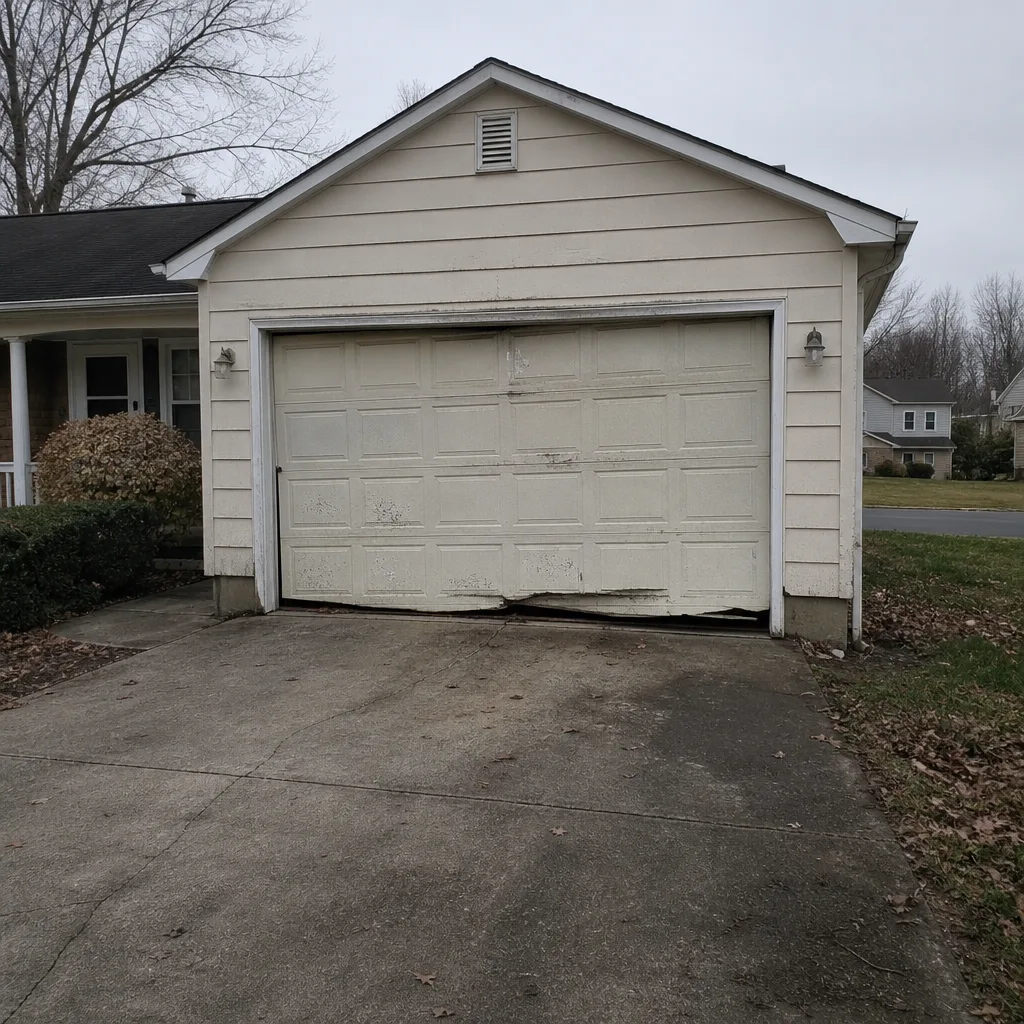 Before
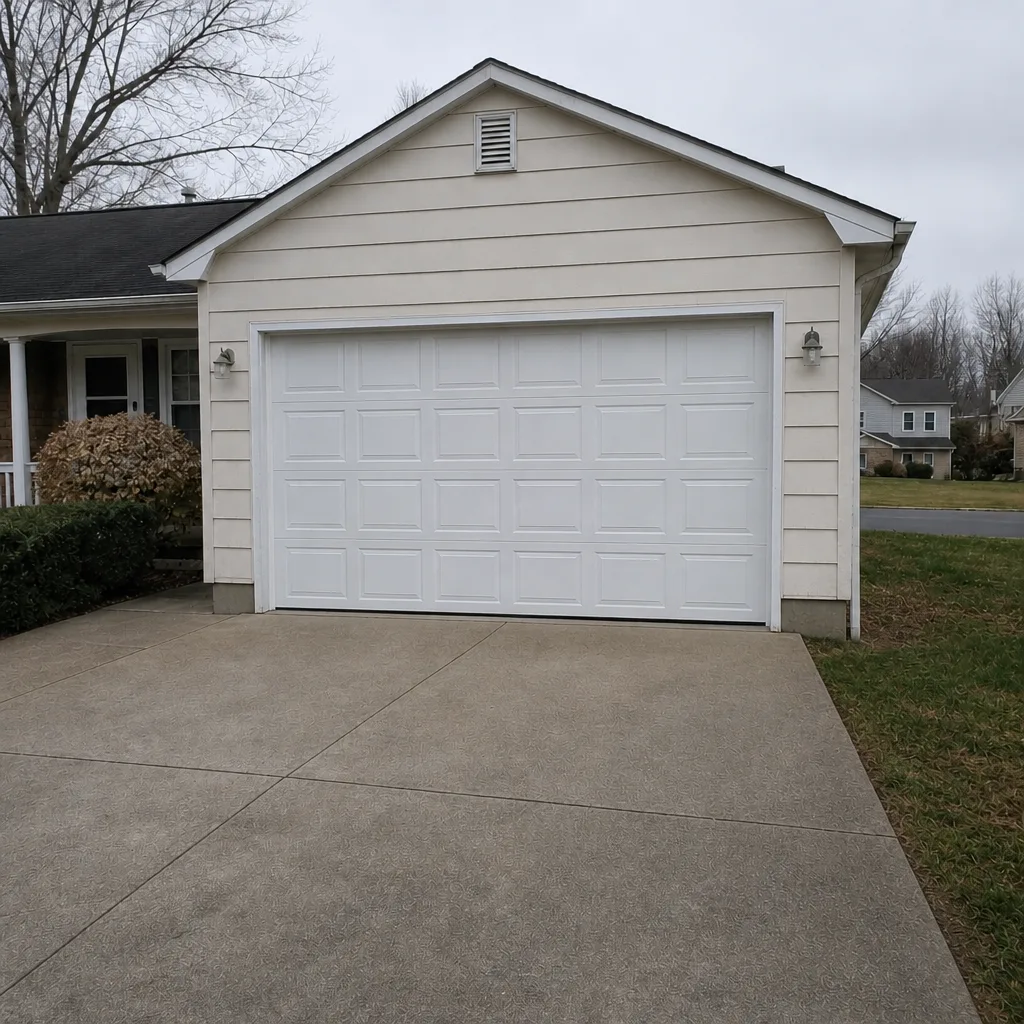 After
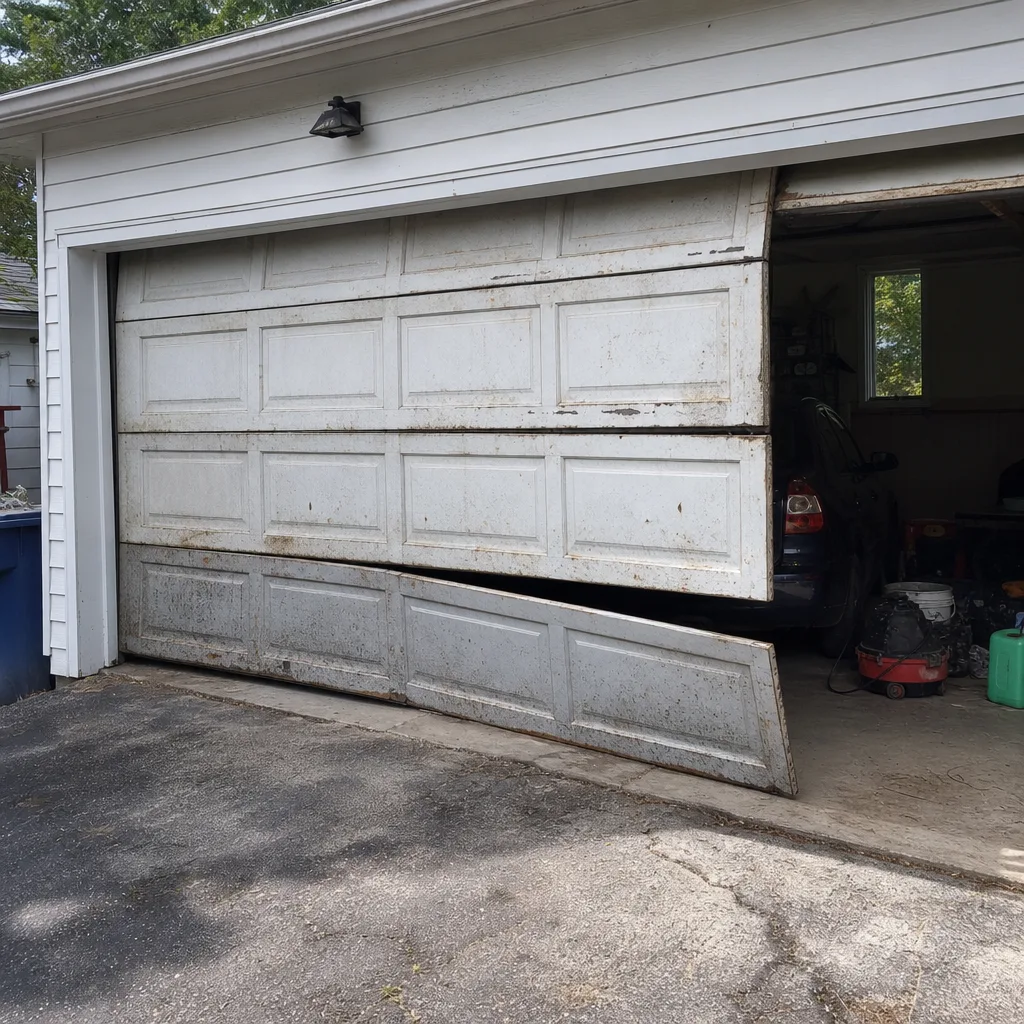 Before
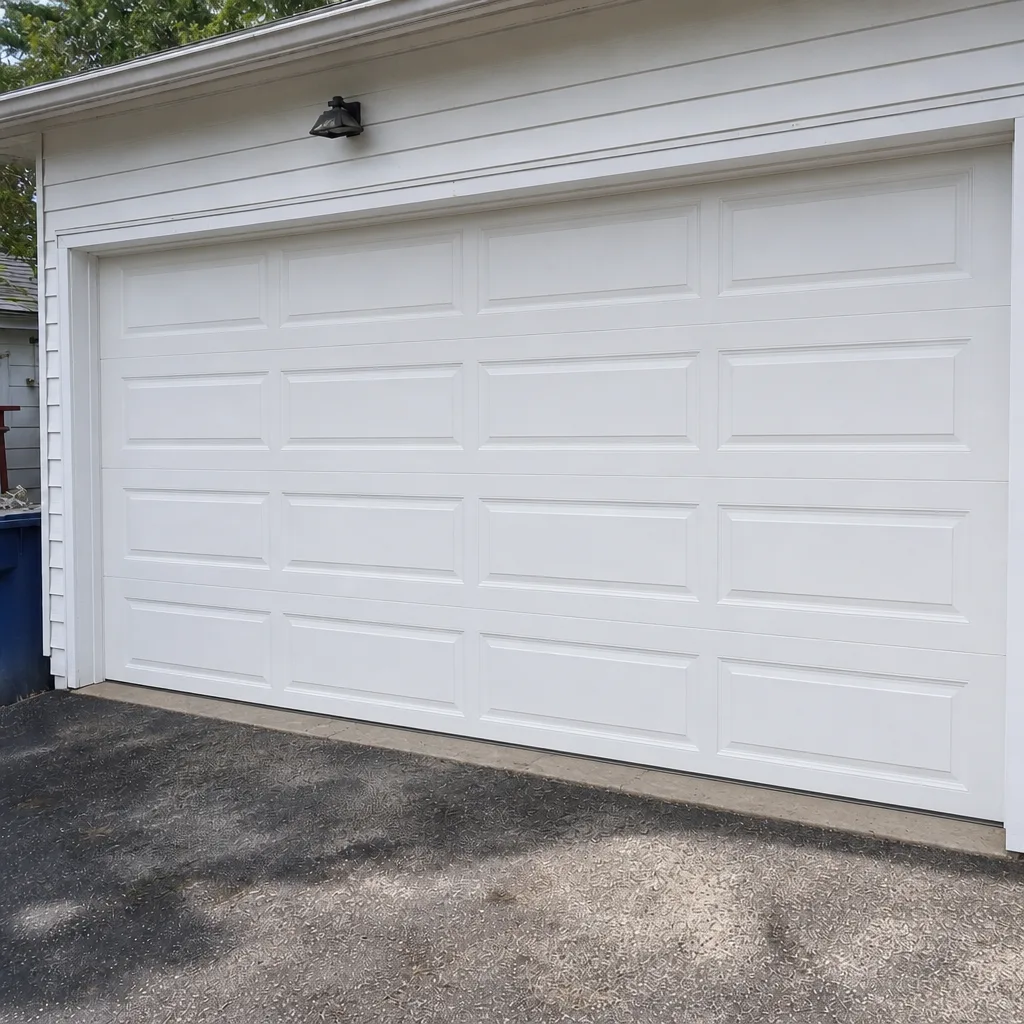 After
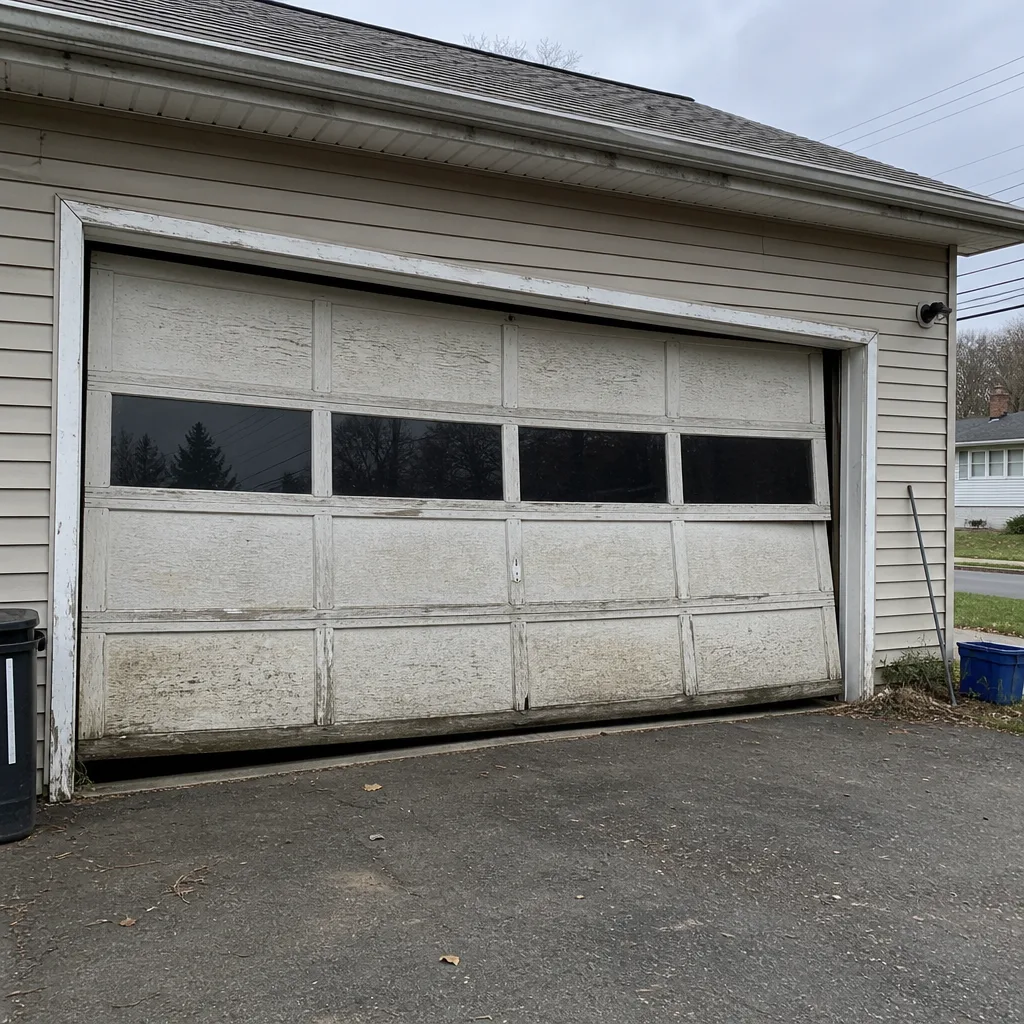 Before
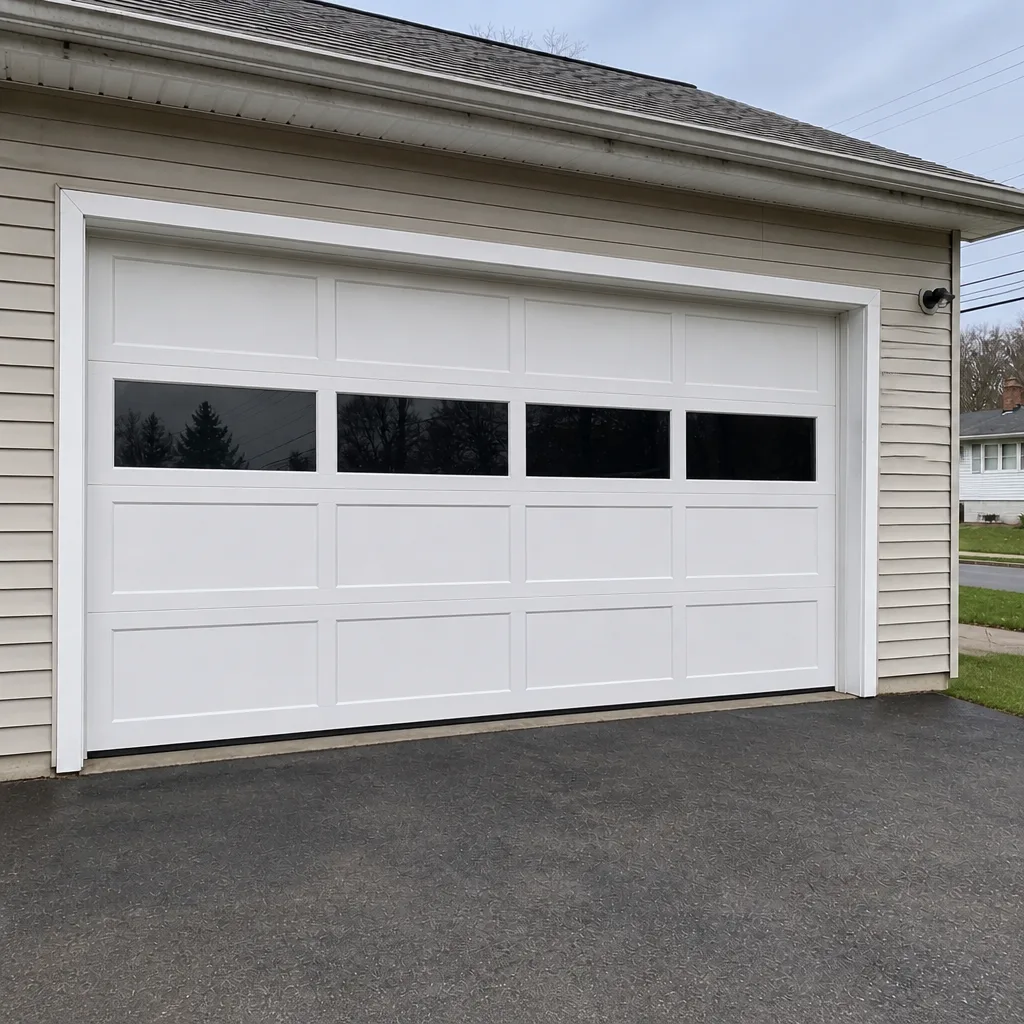 After
When to Call a Professional
Call a professional the moment a warning sign involves the spring, a cable, or the door’s balance. A visible gap in the spring, a cable off its drum, a door that hangs crooked, or a door that won’t stay up are all situations where the safest move is to stop using the door and have it checked. The opener and remote issues are usually less urgent, but a door that reverses on closing or a motor that’s failing needs attention before it becomes a bigger repair. If you’re in Norwich and not sure which category you’re in, describe what you’re hearing and seeing, and we’ll help you work out whether it can wait. Garage Door Repair Norwich offers free estimates in Norwich. Call (877) 517-6532 and tell us what the door is doing.
Frequently Asked Questions
You’ll usually see a clear gap or split in the torsion spring coil above the door, visible from about ten feet away without touching it, and the door may feel very heavy or won’t lift at all. A single loud snap or bang followed by a door that won’t open is the other common sign. Don’t reach into the spring assembly to test it by hand; call a technician for an inspection instead. Call (877) 517-6532 if you’d like a free estimate.
A door that hangs crooked at rest usually means a cable problem, not a track problem, especially if the track looks straight. One cable may be slack, off its drum, or frayed, which removes lift from that side. Stop using the door and have it inspected, since a cable under load can snap. Call (877) 517-6532 to arrange a look.
No, and we’d advise against trying. Torsion and extension springs are wound under heavy tension, and the correct winding tools and technique are a trained skill. Spring repair is one of the most injury-prone jobs in the trade, and it’s the safety reason we treat it as a specialty. Call (877) 517-6532 for spring repair and a free estimate.
Cold weather makes the door heavier to lift, so the opener works harder and the whole system can feel sluggish. Friction from dry rollers, a slightly out-of-alignment track, or a motor that’s already wearing all get worse in the cold. If the door is only slow but moves evenly, it can usually wait for a scheduled visit. If it’s slow and grinding or reversing, call (877) 517-6532.
A steady squeal or a light rattle can usually wait for a scheduled appointment, especially if the door otherwise works normally. Grinding that changes with direction, a door that reverses, or anything involving a spring or cable should be looked at right away. If you’re not sure, describe the sound and we’ll help you decide. Estimates are free, so call (877) 517-6532.
We work on LiftMaster, Chamberlain, Genie, Clopay, Amarr, Wayne Dalton, Craftsman, and Raynor systems. Knowing the brand helps a technician diagnose by system rather than guess, especially with smart openers that report force and travel issues in their app. If you’re in Norwich and your door or opener is one of those brands, call (877) 517-6532 for a free estimate.
The Bottom Line
A garage door warning sign is a piece of information, not a reason to panic. The four sounds, the visible spring gap, the crooked-at-rest door, and the slow-door distinction each point to a specific component, and describing them accurately gets you a faster, cheaper repair. Triage by force and tension: springs, cables, and balance are stop-today issues, while noise and friction can usually wait. Check your door as the Norwich seasons turn, write down the symptom before you call, and never reach into the spring assembly. If you’re in Norwich and something about your door sounds off, we’re here to help.
Call (877) 517-6532 for a free estimate. Garage Door Repair Norwich is a garage door specialist working on LiftMaster, Chamberlain, Genie, Clopay, Amarr, Wayne Dalton, Craftsman, and Raynor systems, with emergency service for urgent situations. Our technicians have up to 8 years of experience.
Written by the team at Garage Door Repair Norwich.